
- Aug 07, 2014 Command +, (that's the command key, and the comma key) It doesn't matter which command key you use, the one on either side of the spacebar works – that's standard with all command key tricks by the way – just be sure to hit it with the comma / greater than key. Hitting Command +, in nearly every Mac app will open the preferences for that Mac OS X app.
- MacBook Air (Retina, 13-inch, 2020) MacBook Air (Retina, 13-inch, 2018 - 2019) MacBook Air (13-inch, Early 2015 - 2017).
- Click the + plus button and choose 'All Applications' from the pulldown menu, then alongside ‘Menu Title' enter 'System Preferences', and then click into 'Keyboard Shortcut' to set your hotkey. For this walkthrough I chose Control+Command+, as the hotkey. Click 'Add' and close out of System Preferences. Hit Control+Command+, or whatever your shortcut was set as to instantly launch System Preferences from anywhere.
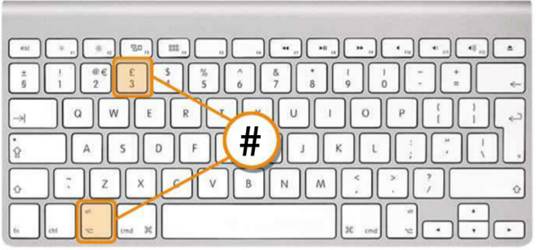
- Apple Keyboard Pro
- Launch Mac App Preferences & Settings With An (Almost ..
- Apple Wireless Keyboard
- US Extended Keyboard - Apple Community
Apple Keyboard Pro
if other system preferences work, you could try fixing keyboard preference file.
on the hard drive-Library folder-Preferences folder, locate the file named 'com.apple.keyboardtype.plist' and move it to desktop, then restart.
if keyboard preference pane opens after that, delete the .plist file.
try the same steps with the 'com.apple.Bluetooth.plis' file
if moving files to the desktop does not fix the problem, you can move them back to the original locations.
try at your own risk though.
Jun 26, 2009 7:03 AM
Hi, Darin!
My short answer = 'No.'
But having answered (and saved) a similar question (or 3), here're a few ideas for you to consider:
ℹ I can think of several ways to accomplish this — but none are nearly as quick-and-easy as using the mouse and a single click on an application's Dock icon — or in this case, the menu. If you're unfamiliar, Apple KnowledgeBase Article #106850: 'About the Dock' explains how to add applications to the Dock.
Perhaps someone more brilliant than I can think of a single-keystroke approach..? Anyway, I'll list some ideas — in case you really want/need to avoid the mouse.
(1) From Finder, (control + F3) moves focus to the Dock »» arrow keys (etc.) move among applications »» opens the selected application.
[To understand other options implied by 'etc.,' see article linked in next item.]
(2) As described in this OS X 10.4 Help article, you can open the Applications folder using ( ⌘-shift-A ) »» then move among applications using any of the shortcuts described in the same article »» opens the selected application.
(3) You can create global shortcuts yourself, as described in another OS X 10.4 Help article — but the article notes that 'You can create keyboard shortcuts only for existing menu commands. You cannot define keyboard shortcuts for general purpose tasks such as opening an application or switching between applications.'
(4) Although Applescript or Automator could accomplish this, too, implementing the script would take as much or more effort than clicking in the Dock (e.g., control-clicking intio a contextual menu)..
There are further keyboard shortcuts available via 'Full Keyboard Access,' Sticky Keys, or mouse keys via System Preferences :: Universal Access. Apple KnowledgeBase Article #75459: 'Mac OS X keyboard shortcuts' describes some of these.
I hope this helps..
Best wishes,
Dean
p.s. Once you've reached System Preferences by whatever means, here's a cool shortcut: The cursor's already poised in the Spotlight box, so just type the first letter or two of the PrefPane or setting you seek. Keep typing or scroll with arrows, if needed, then hit .. Voilá!
Mar 27, 2018 How to Change Keyboard Settings on Windows 10. How to change Windows 10 keyboard settings or keyboard layout and how to change Windows 10 keyboard shortcuts layout are some of the widely searched terms over the internet, and that's the main reason for us to bringing out this Microsoft Windows 10 keyboard settings customization guide. Apple is not likely to replace the deprecated Api's nor provide access to the underlying multitouch technology so that's the end of the line for MagicPrefs and similar software. TLDR if it doesn't work anymore thats it, if it still works then its just a matter of time until it won't.
Dec 15, 2005 12:23 PM
Your device isn't recognized by your Mac
Follow these steps if your mouse, keyboard, or trackpad isn't recognized by your Mac.
Make sure that your wireless mouse, keyboard, or trackpad is turned on
The Magic Mouse and Magic Mouse 2 have a slide switch on the bottom of the device. Slide the switch to turn on the device. On the Magic Mouse, the green LED briefly lights up. On the Magic Mouse 2, green coloring is visible beneath the switch.
The Magic Keyboard, Magic Keyboard with Numeric Keypad, and Magic Trackpad 2 have a slide switch on the back edge of the device. Slide the switch to turn on the device (green coloring becomes visible). Earlier Apple Wireless Keyboard models have a power button on the right side of the device. Press the button and you see a green LED on the top of the device, near the button.
When you turn these devices on, they appear as connected in Bluetooth preferences and in the Bluetooth menu in your menu bar. If a device doesn't appear there, make sure it's charged or replace it batteries, and make sure it's been paired with your Mac. Macbook screenshot to clipboard.
Make sure that your device has been set up to work with your Mac
Learn how to pair your Magic Mouse 2, Magic Keyboard, Magic Keyboard with Numeric Keypad, Magic Trackpad 2 and earlier models of Apple wireless devices with your Mac.
Make sure that Bluetooth is turned on
Launch Mac App Preferences & Settings With An (Almost ..
Use your Mac notebook's built-in trackpad or a USB mouse to choose Apple menu > System Preferences, then click Bluetooth. Make sure that Bluetooth is turned on.
Refer to the table below for more information on determining the Bluetooth status. If the Bluetooth icon doesn't appear, or if the menu bar status continues to indicate that Bluetooth is off, restart your computer and then try to turn Bluetooth on again.
| Bluetooth menu icon | Bluetooth status |
|---|
| Bluetooth is on, but no wireless devices are connected to the Mac. See the Make sure that your wireless mouse, keyboard, or trackpad is turned on section of this article. |
| Bluetooth is on and at least one wireless device is connected. |
| When this icon flashes, at least one wireless device has a low battery. Click the Bluetooth icon to identify the affected device, then recharge the device or replace its batteries. |
| Bluetooth is off. Click the Bluetooth icon using a USB mouse or built-in trackpad and select Turn Bluetooth On. |
| Bluetooth is offline or unavailable. Restart your Mac. If the Bluetooth status doesn't change, disconnect all USB devices and restart your Mac again. |
Make sure that your devices are charged
Magic Mouse 2, Magic Keyboard, Magic Keyboard with Numeric Keypad, and Magic Trackpad 2 have built-in rechargeable batteries. You can charge these devices by connecting them to a Mac or a USB power adapter using a Lightning to USB Cable. For the fastest battery charging performance, be sure your device is switched on when connected to the Lightning to USB Cable.

To check the battery level of these devices, click the Bluetooth icon in your Mac's menu bar, then select your device by name. If the battery level of any device is low, recharge the device. If the device isn't showing, make sure the device is turned using the steps outlined above.
Turn the device off and on
Apple Wireless Keyboard
If your Apple wireless mouse, keyboard, or trackpad isn't recognized by your Mac after following the tips above, try turning the wireless device off, waiting a few seconds, and then turning it back on.
Your mouse or keyboard intermittently stops responding
- Click the mouse or trackpad or press a key on the keyboard to reconnect the device to the computer. It might take a moment for the device to respond.
- Check for wireless interference.
Your mouse doesn't scroll up or down or side to side
If you can't use your mouse to scroll through a web page or document, make sure that you're using the correct Multi-Touch gestures and have set up your scrolling speed preferences correctly.
Your mouse or trackpad doesn't track as expected
Apple Wireless Mouse, Magic Mouse, and Magic Mouse 2 can be used on most smooth surfaces. If tracking issues occur, try these options:
- Choose Apple menu > System Preferences, then click Mouse. Set the 'Tracking speed' slider to adjust how fast the pointer moves as you move the mouse.
- Try using a different surface to see if tracking improves.
- Turn the mouse over and inspect the sensor window. Use compressed air to gently clean the sensor window if dust or debris is present.
- If multiple Bluetooth wireless devices are in use nearby, try turning them off one at a time to see if the issue improves.
Learn more what to do if your trackpad isn't tracking correctly.
Your keyboard has one or more keys that don't respond
Use the Keyboard Viewer to test whether the keyboard keys are responding correctly when they are pressed.
- Choose Apple menu > System Preferences, then click Keyboard.
- Click the Input Sources tab.
- Make sure that the keyboard language that you use is listed on the left side. If it's not, click the add button (+) and choose from the languages that appear.
- Select the 'Show Input menu in menu bar' checkbox.
- Click the Keyboard tab, then select 'Show keyboard and emoji viewers in menu bar' checkbox, if present.
- From the Input menu in the menu bar, choose Show Keyboard Viewer. The Keyboard Viewer showing the keyboard layout appears on your display.
- Type the key on the keyboard that doesn't respond and see if the corresponding key highlights on the Keyboard Viewer. If it does, that key is functioning correctly.
If you enable the Mouse Keys feature, many keys might not respond as you expect. To turn off Mouse keys, choose Apple menu > System Preferences, then click Accessibility. Choose Mouse & Trackpad from the list on the left side, then then deselect the Enable Mouse Keys checkbox.




/image%2F6302924%2F20210327%2Fob_9153f3_macbook-pro-backup-solutions.jpeg)
/image%2F6302924%2F20210327%2Fob_624283_rar-download-apple.jpeg)
/image%2F6302924%2F20210327%2Fob_a509d9_apple-magic-mouse-right-click-not-work.jpeg)
/image%2F6302924%2F20210327%2Fob_bc42f8_windows-7-software-for-macbook-pro.jpeg)